

A multimillion-dollar yacht doesn't need a million visitors. It needs the right few people to believe it's real and take a first step.
That's true for anything expensive: a premium service, a custom build, a five-figure contract. Your website isn't there to collect traffic. It's there to move the right few people one step closer to talking to you.
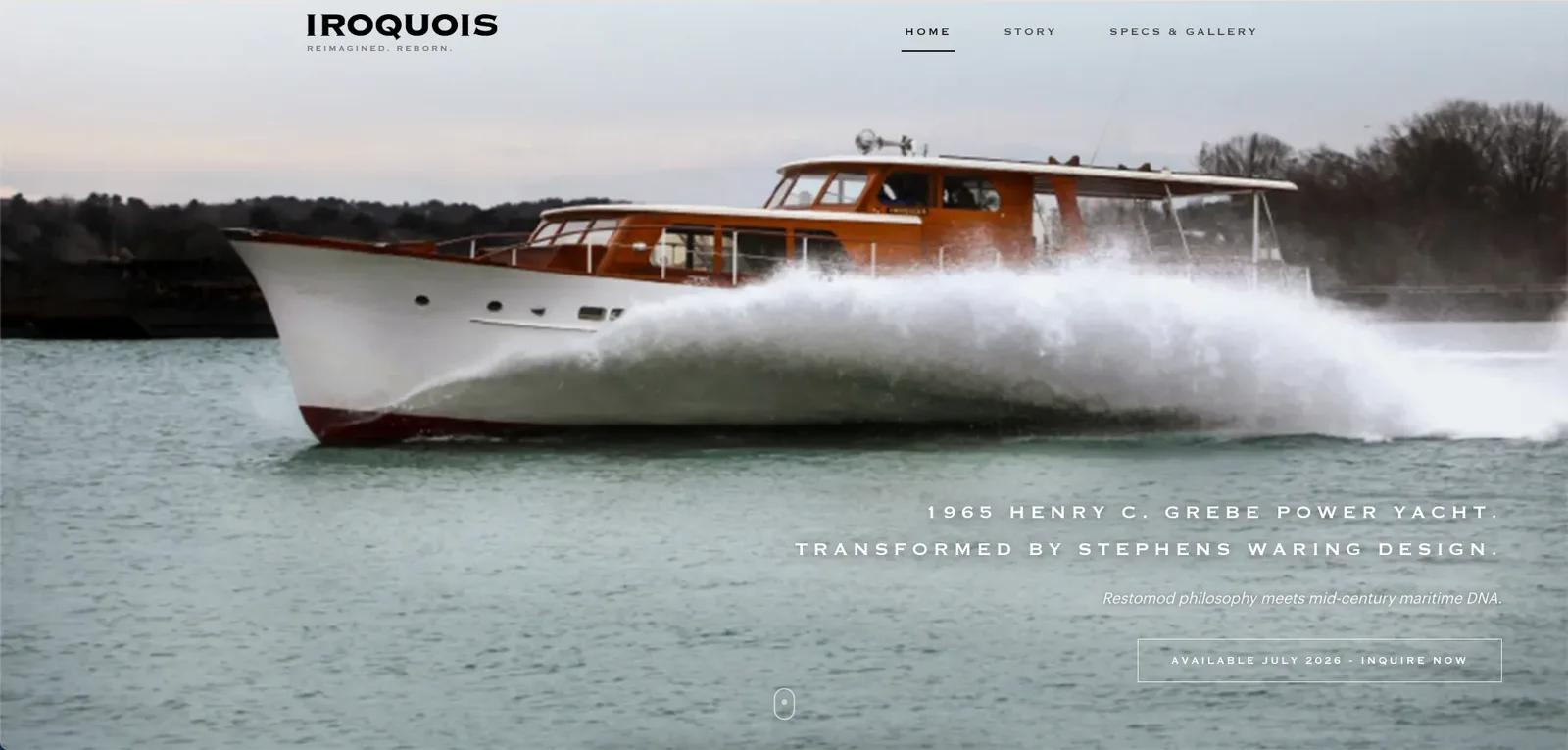
I recently built a custom WordPress marketing site for the Iroquois, a 1965 Henry C. Grebe yacht that Stephens Waring Yacht Design completely rebuilt. Below are the three ideas that shaped the site, the one thing I'd change, and a free checklist so you can check your own site against all three.
The goal: get the right person to take a step
The owner didn't want a pretty website. They wanted the right buyer to look at this boat, believe it was real, and reach out. That's the goal for any high-ticket offer. Not likes, not pageviews. One qualified person taking one step.
Three ideas made the site work for that goal.
1. Give your site one job
The navigation on the Iroquois site has three pages: Home, Story, and Specs and Gallery. No blog, no long menu, nothing competing for attention. Everything points to one action: inquire about the boat.
Most business websites try to do everything. They pitch every service, link to every social profile, and bury the one thing that matters. When visitors don't know what to do next, they do nothing.
What to do with your own site:
- Pick the one action you want: a call, a quote, a booking.
- Make that action the most obvious thing on every page.
- Cut or demote anything that doesn't lead there.
2. Show proof before you ask
Nobody wants to be the first person to trust something expensive. So on the Iroquois site, the Story page does the convincing before any request is made. It shows the original 1965 drawings, the renderings, and photos of real people working on the boat. It also leans on the credibility Stephens Waring Yacht Design already had.
That page held attention longer than any other page on the site. Visitors spent a couple of minutes on it, more than four times as long as on the homepage. That tells me people don't skip the proof when it's real and specific. They read it.

What to do with your own site:
- Show your work before you ask for the sale: results, process, real photos.
- Put proof next to the action, not buried on a separate page.
- Be specific. "We're experienced" proves nothing. A real project, shown honestly, proves a lot.
3. Make the first step easy, and capture who takes it
Buying a boat is a huge commitment, so the site doesn't lead with that. It offers something small first: a spec sheet. One click, and more than 200 people downloaded it.

A small first step works because it lowers the risk for the visitor. Nobody has to commit to anything to ask for more information.
Here's what I'd change. Right now, the spec sheet downloads without asking for anything in return. Someone downloads it, and the next move is on them to get in touch. We don't know who they are, and neither does the broker.
I'd put the spec sheet behind an email address or a phone number. You might get fewer downloads, but for something this expensive you want people you can follow up with, not a pile of anonymous clicks. If each person who wanted the spec sheet had left contact details, the broker could have reached out to more than 200 interested people directly, instead of waiting on the handful who filled out the inquiry form.
The trick is getting the friction right: enough that not just anyone does it, but not so much that your ideal buyer won't.
What to do with your own site:
- Offer a free guide, a sample, a quote or a checklist as the first step.
- Ask for an email or phone number in exchange. One or two fields, not ten.
- Follow up. The capture only matters if someone reaches out.
What we built
- A custom WordPress site with three pages: Home, Story, and Specs and Gallery.
- One call to action on every page: inquire about the boat.
- A Story page built from the original 1965 drawings, the new renderings, and photos from the rebuild.
- A downloadable spec sheet as a low-commitment first step.
- Google Analytics and download tracking, so the broker could see engagement, traffic sources, and spec sheet downloads.
The result: the right few hundred, not a stadium
Traffic to the site wasn't huge, and it wasn't supposed to be. Visitors came from direct links, Google, Facebook, Instagram, YouTube, and the Stephens Waring site itself.
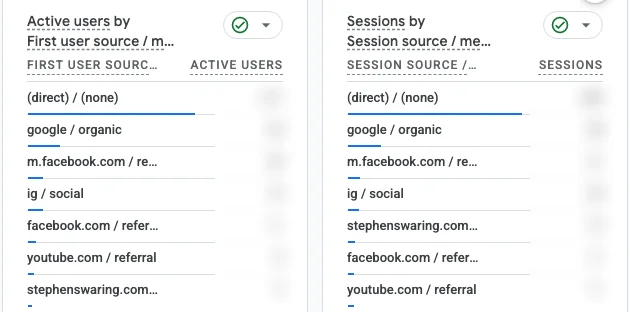
For a high-ticket offer you don't need a stadium. You need the right few hundred people and a site that guides them. That's the whole approach: one job, proof first, an easy first step you can follow up on.
Check your own site: the free website gap checklist
I turned these three ideas into a ten-question, yes-or-no checklist. It shows you where your website is leaking leads: is there one clear action, is there real proof on the page, can someone take a first step on their phone, and do you capture who takes it.
The Website Gap Checklist
Find out in five minutes why your website isn't bringing in customers, and know exactly what to fix first so more visitors call, book and buy.
Your checklist is downloading.
Didn't start? Download the PDF here.
Rather have it checked for you? Run the free website gap checker on your site.