

People freeze on blogging because they think they need ideas. You don't. You need a list of questions you're tired of answering.
Open your sent email, your texts, and the notes from your last few calls. Anything you've explained more than twice is a post somebody is searching for right now.
Turn what they ask into what they type
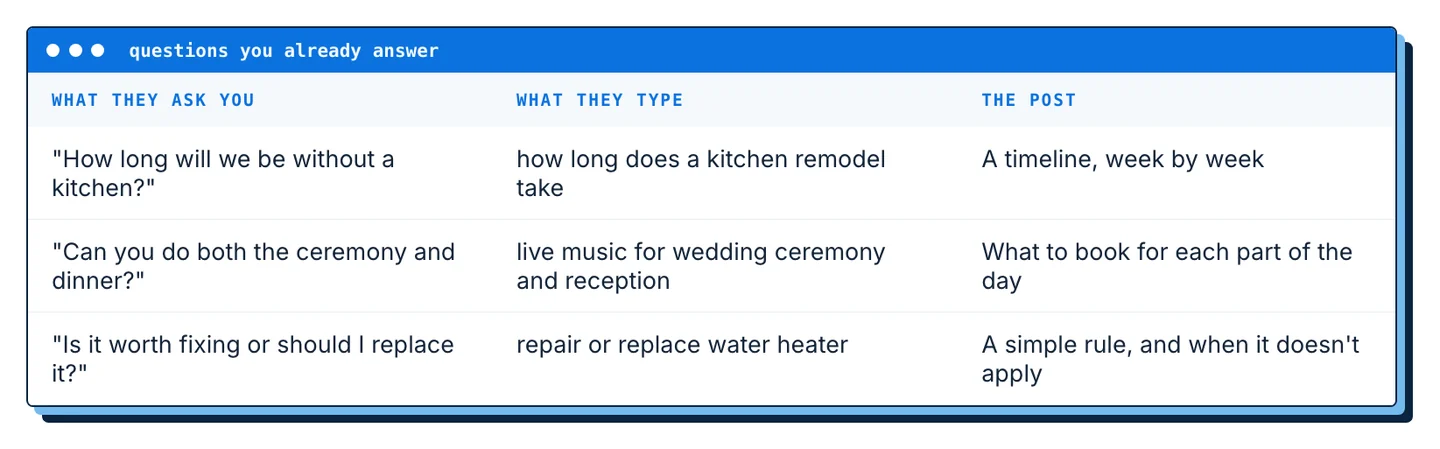
People talk one way and search another. Type your question into Google and look at what it suggests. Use the version that shows up. Local keyword research walks through it with free tools.
Choose the first one
Score each question from one to three on each of these and pick the highest:
- How often do you get asked?
- Is the person asking close to buying?
- Do you know something about it that isn't already on every other site?
The last one matters most. Google has plenty of general advice. What it doesn't have is your job in that building last March.
One post, one question
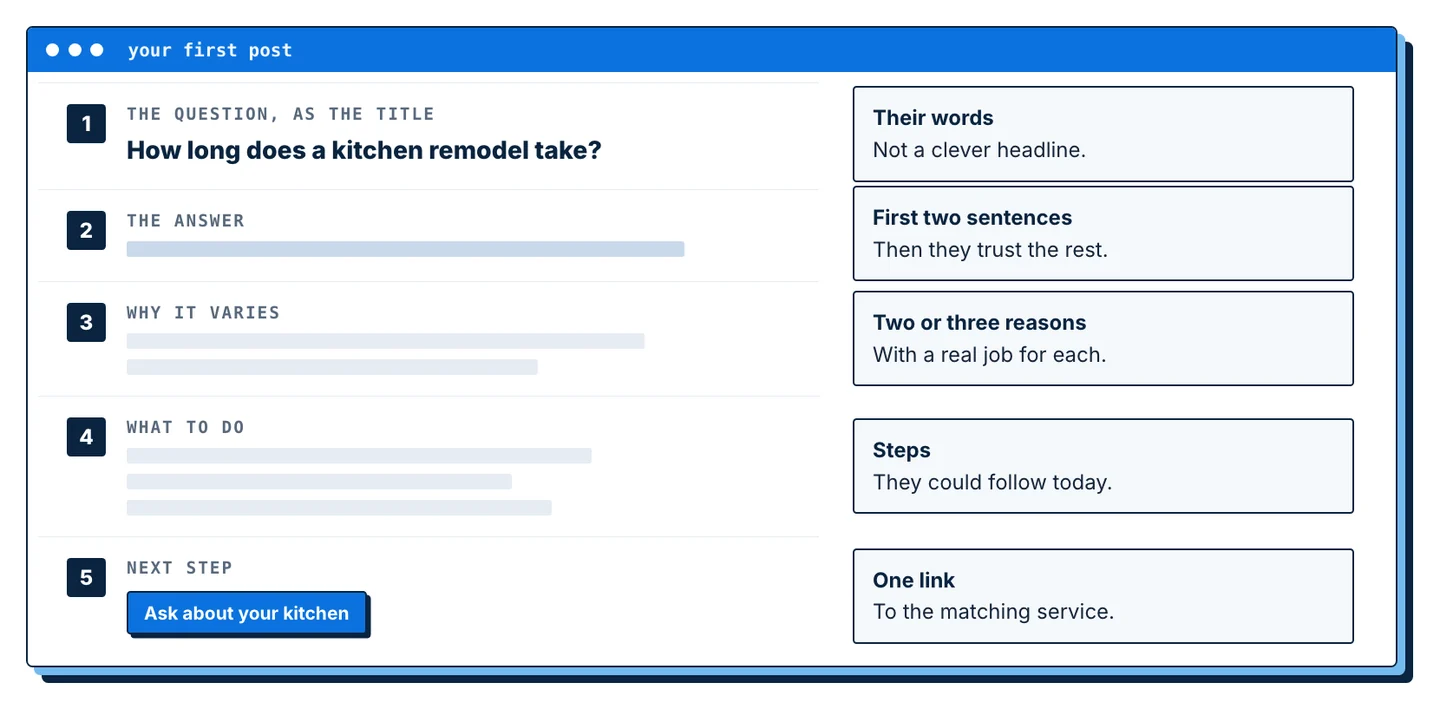
If you find yourself answering two questions, you've got two posts. Good.
Write it by talking
Record yourself answering the question out loud, the way you would on the phone, and have your phone turn it into text. Then cut the throat-clearing at the start and fix the spelling. It'll sound like you, because it is. If you use a tool to tidy it up, take out anything you wouldn't say or can't back up.
Use real details
"We recently helped a client" is filler. "A 1920s two-flat with no shutoff on the second floor" isn't. Ask before you name anyone, and check the facts against your own records before you publish.
How long, how often
As long as it takes to answer properly, then stop. For most questions that's 500 to 1,000 words. And pick a pace you can keep. One good post a month for a year beats ten in January and silence. An abandoned blog makes a business look closed.
Get more out of each one
- Send it to the next customer who asks. That alone makes it worth writing.
- Read the main point into your phone as a short video.
- Post the photo and the first two lines on your Google Business Profile.
- Link to it from the matching service page, and back.
After you publish
Check the title, the description and the headings with the on-page SEO checklist, then give it time. New posts often take weeks or months to settle. Look in Search Console after a month to see which searches it's showing for, and add a section answering whatever you missed.
The free SEO page audit will tell you if something's stopping Google from reading it.