

"Great service, highly recommend!" is nice to get and does almost nothing on a website. A stranger can't tell what you did, who it was for, or whether you'd do the same for them.
The testimonials that sell are specific. They say what was wrong, what it was like to work with you, and what changed. You get those by asking three questions at the right moment. Here's how.
What a good one looks like
Look at the two on the Burke Black Design Build home page, a site I built. Neither says "great service".
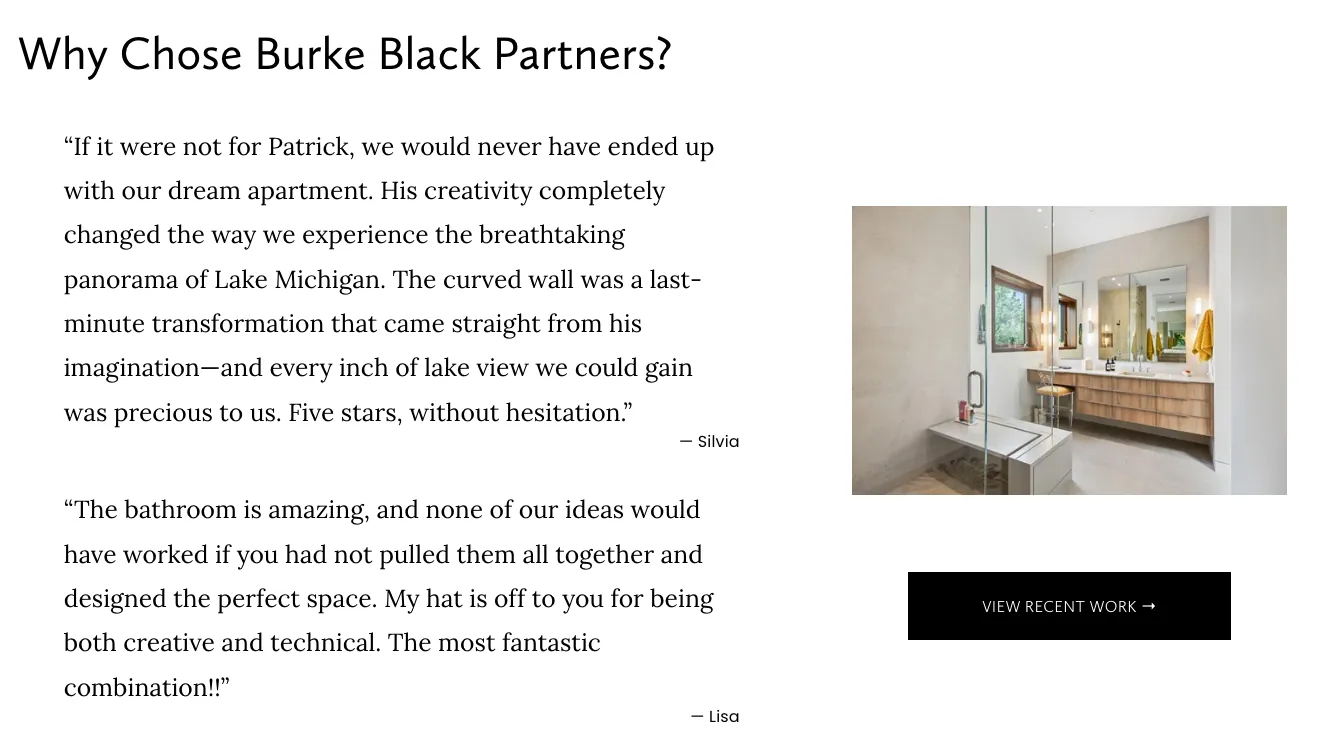
One talks about a curved wall that gained them every inch of lake view. The other says none of their ideas would have worked without someone pulling them together, and calls it "both creative and technical". Those are details only a real client would write, and they answer exactly what a new client is worried about.
Who to ask, and when
Ask right after a win: the job is finished, the problem is solved, the customer just said thank you. That's when they're happiest and the details are fresh. Wait a month and you'll get "they were great".
Ask the customers you'd like more of. If you want more kitchen remodels, a kitchen client's words do more for you than a quick repair client's.
The three questions
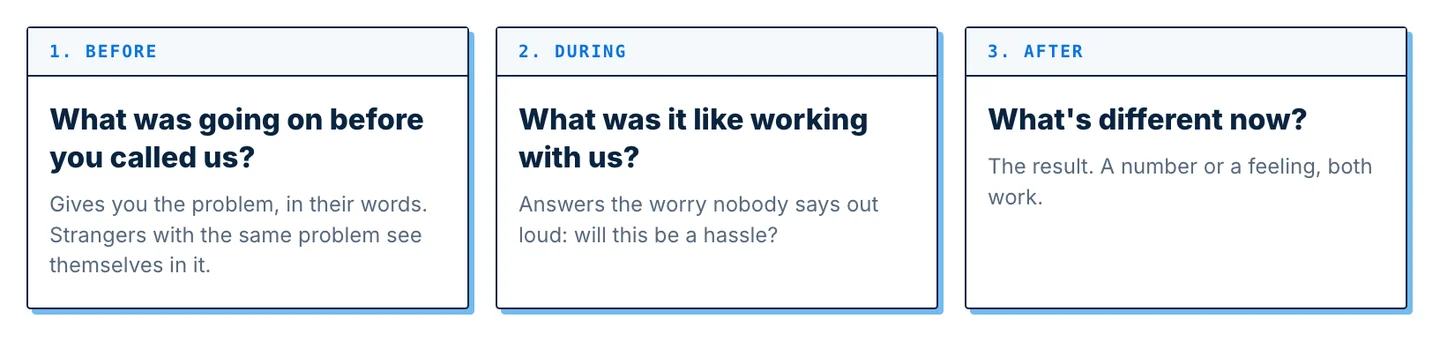
- Before: "What was going on before you called us?" This gets you the problem in their words, and strangers with the same problem see themselves in it.
- During: "What was it like working with us?" This answers the worry nobody says out loud: is this going to be a hassle?
- After: "What's different now?" The result. A number, a feeling, a thing they can do now that they couldn't before.
How to ask
Make it as easy as replying to an email. Here's one you can copy:
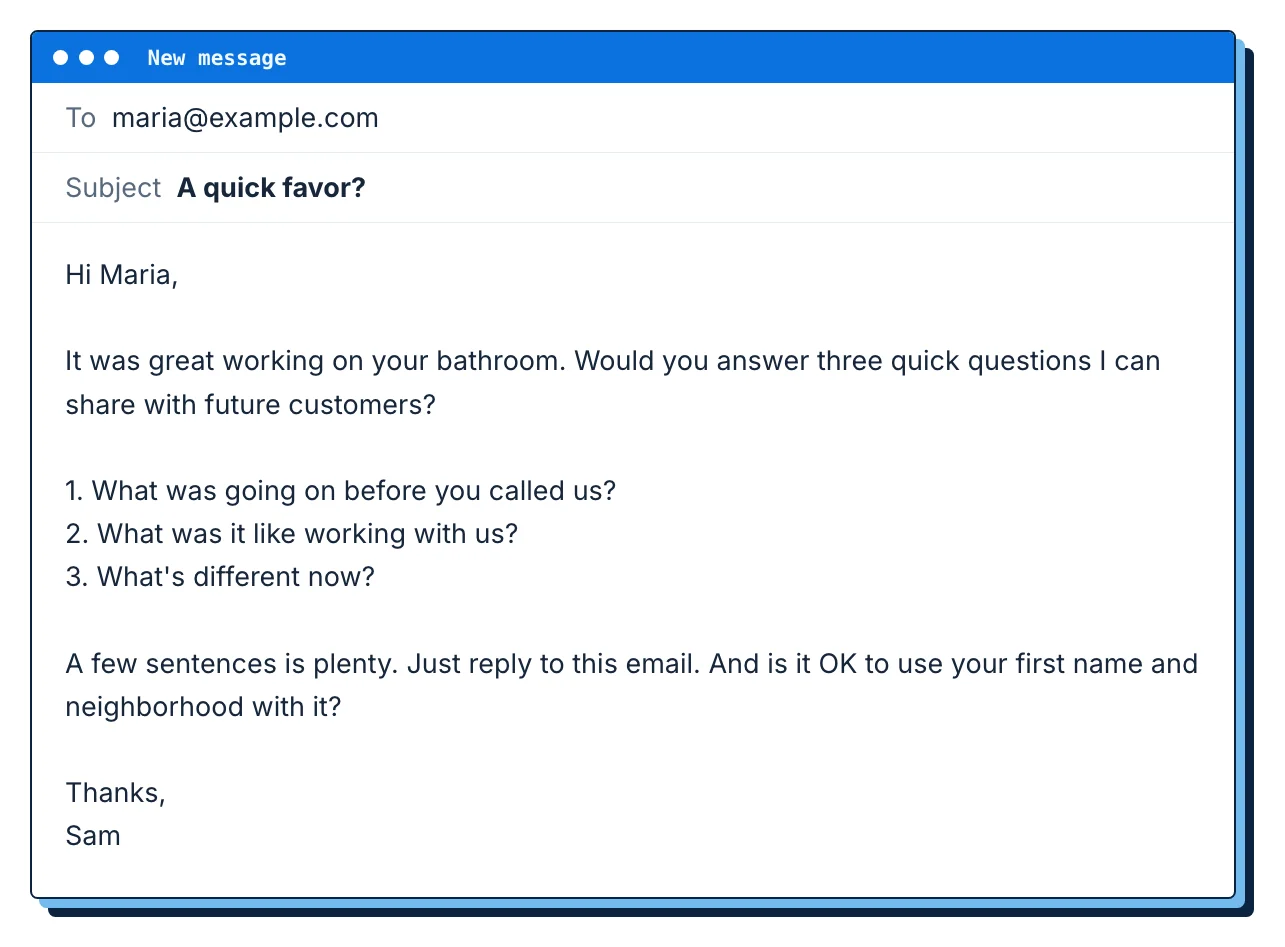
If they're busy, offer to write it for them: "Can I put together a few lines from what you told me on our last call, and you tell me if it sounds right?" Then send it back for a yes. It has to be their words and their approval, not yours.
Get permission, in writing
Ask how they want to be named: first name only, first name and neighborhood, full name and business, or a photo. Keep their reply email. If they ever change their mind, take it down.
Edit lightly
Fix typos, cut it down, and pick the strongest two or three sentences. Never add a claim they didn't make, and send back anything you shortened so they can approve it. Never publish one that isn't real.
Where to put them
- Right next to your button, where people decide.
- On the matching service page: a kitchen testimonial on the kitchen page.
- With a name and a detail, like "Maria, Lincoln Park kitchen". Anonymous quotes read as made up.
- One strong one on the home page, near the top.
Google reviews and video
Testimonials on your site and reviews on Google do different jobs, and you want both. For Google reviews, send your review link separately, and never offer anything in exchange. I cover that in how to set up your Google Business Profile. If a client is comfortable on camera, a 30-second phone video answering the same three questions is the most convincing testimonial there is.
Then put them where they work. How to write website copy that turns visitors into customers shows where proof goes on each page. And "is there real proof where people decide?" is one of the ten questions on my free checklist.
The Website Gap Checklist
Find out in five minutes why your website isn't bringing in customers, and know exactly what to fix first so more visitors call, book and buy.
Your checklist is downloading.
Didn't start? Download the PDF here.
Rather have it checked for you? Run the free website gap checker on your site.