

Your past work page is the proof behind everything else on your site. It's where a careful buyer goes to check whether you've done this before, for someone like them, and whether it turned out well.
You don't need to be a writer to make it work. You need the right projects and the same few details for each one.
Pick the projects you want more of
Not every job. Three to six projects that look like the work you want next. If you want more kitchens, lead with kitchens. If you want bigger jobs, show bigger jobs. Your work page quietly tells people what you're for.
A real example
The Work page on the Burke Black Design Build site, a Chicago remodeler I built a site for, is a grid of real projects. Every title says what and where: Wicker Park Condo Kitchen and Bath, Lake View Blue Kitchen and Bath, River North Roof Deck.
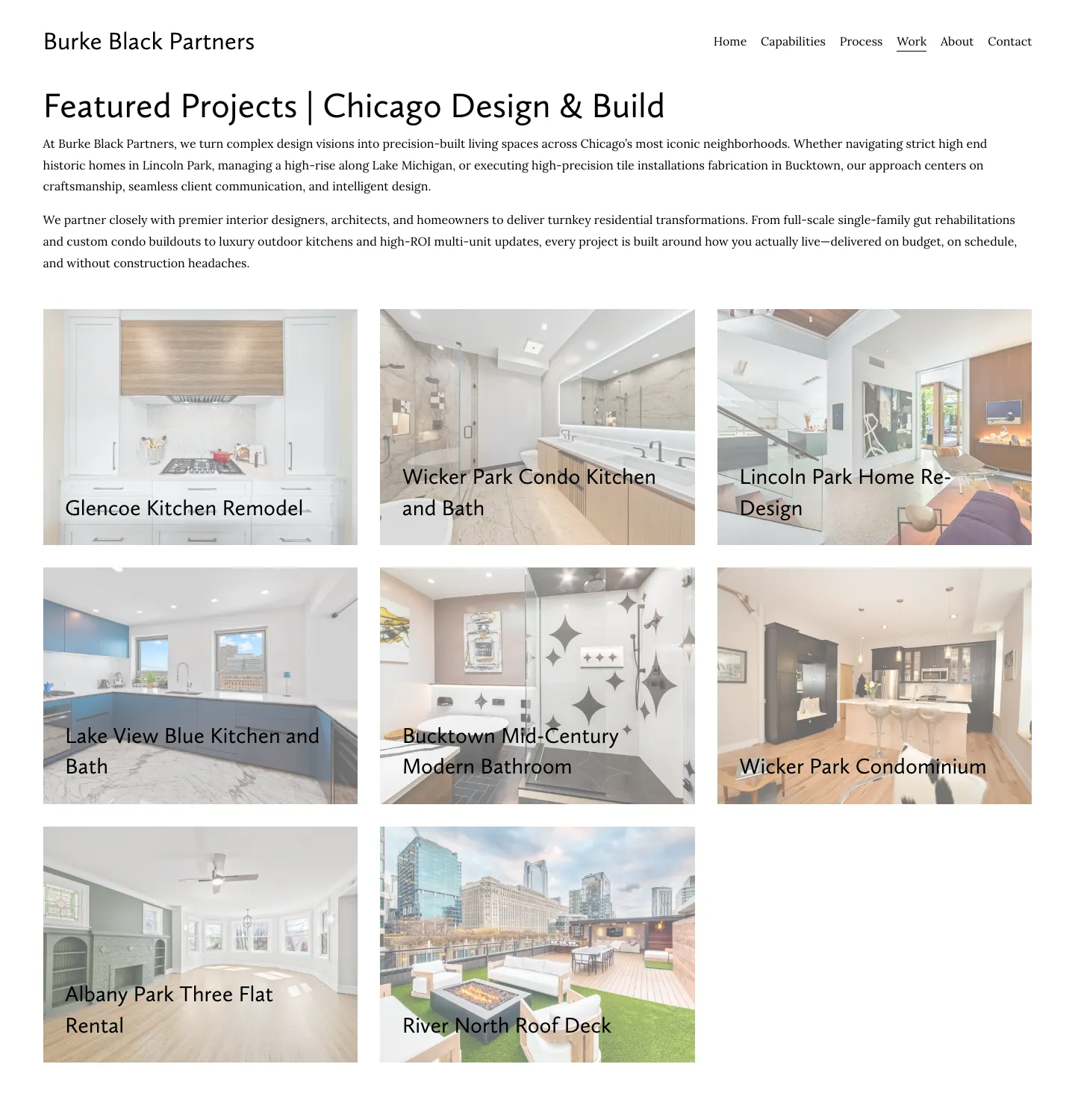
After the new site went live, the owner sent a prospective client to that Work page and won the project. Same work as before. It was just finally easy to see.
The same six things for every project
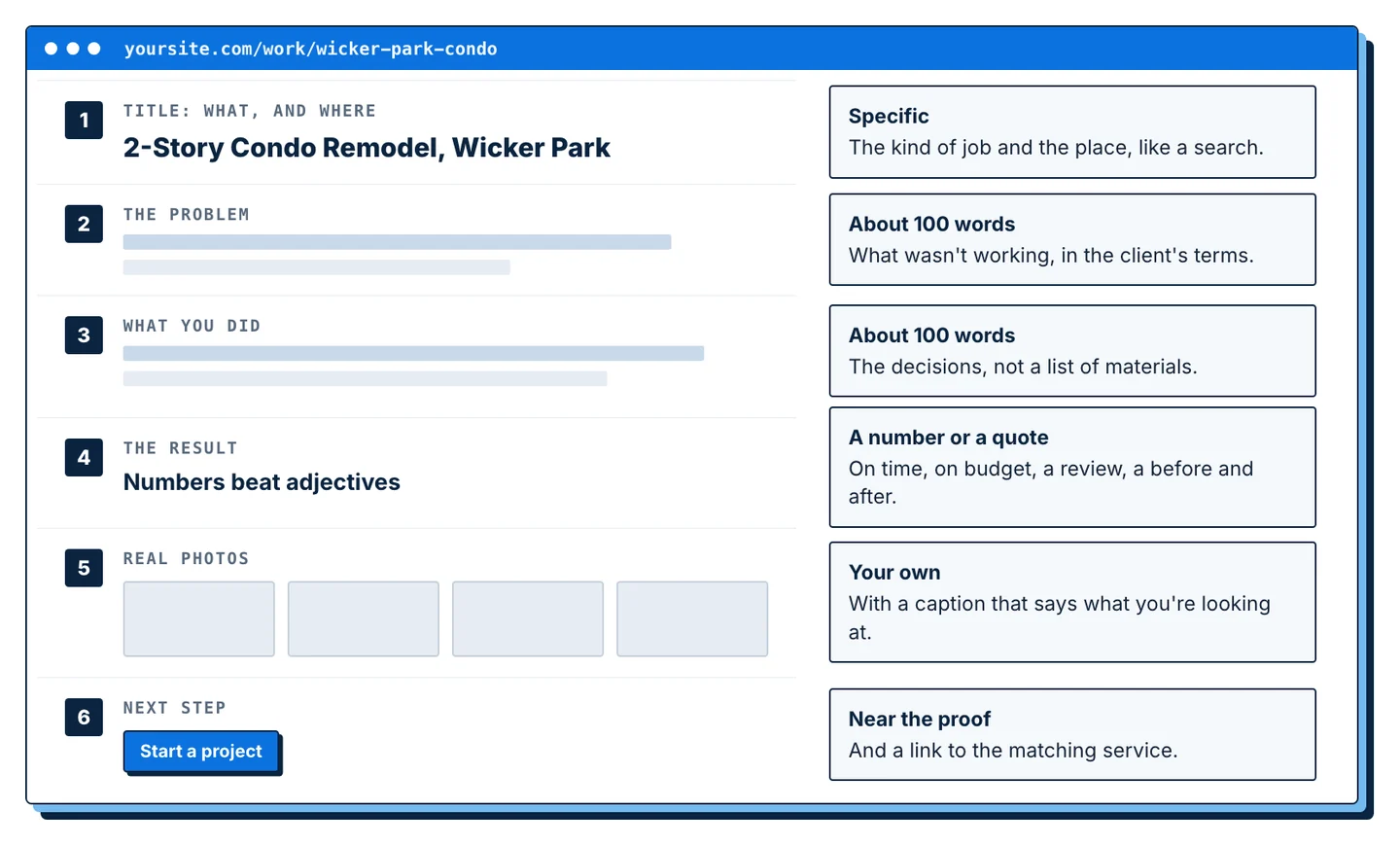
- A title with what and where: "2-Story Condo Remodel, Wicker Park".
- The problem, in about 100 words. What wasn't working, in the client's terms.
- What you did, in about 100 words. The decisions you made, not a list of materials.
- The result. A number if you have one, a quote from the client if you don't.
- Real photos, with captions that say what you're looking at.
- A next step, right there, plus a link to the matching service.
Numbers beat adjectives
"Beautiful, high-quality work" proves nothing. "Finished in nine weeks, inside the budget" proves a lot. So does a before and after, square footage, a date, or a review from that client.
Your proof doesn't always have to be a big number either. The Iroquois yacht site I built has a Story page with the original 1965 drawings, the renderings and photos of the people doing the work. Visitors spent over two minutes on it, more than four times as long as on the home page. Real, specific proof gets read.
Getting permission
Ask before you name a client or show their home. Most say yes, especially if you offer to leave out the address or use first names only. Keep the email where they said yes. If you can't name a client, describe them: "a national news publisher", "a family in a Lincoln Park two-flat".
Link everything together
Each project should link to the service it shows, and each service page should link to two or three matching projects. If you work in different areas, name the neighborhood in each project. That's also how Burke Black's footer works: neighborhoods linked to real projects there. More on that in service area pages.
Real words from the client make any project stronger. Here's how to collect testimonials that say something specific.
The Website Gap Checklist
Find out in five minutes why your website isn't bringing in customers, and know exactly what to fix first so more visitors call, book and buy.
Your checklist is downloading.
Didn't start? Download the PDF here.
Rather have it checked for you? Run the free website gap checker on your site.